The Essential Guide to AED Service and Maintenance: Ensuring Total Readiness
What is AED Service and Maintenance?
AED service and AED maintenance encompass the routine inspections, battery and pad replacements, and software updates required to ensure an automated external defibrillator is rescue-ready. Professional AED maintenance programs eliminate the risk of device failure during a cardiac emergency by automating the tracking of expiration dates and compliance requirements.
Having an AED on-site is a critical first step in heart safety, but a defibrillator is only as effective as its last service check. Research shows that a significant percentage of AEDs in the field may fail to deliver a shock due to depleted batteries or dried-out electrode pads.
For organizations in Nashville and across the country, managing these Class III medical devices can be a complex administrative burden. In this guide, we’ll explore the requirements for professional AED service and how Premedics’ turnkey management eliminates the "readiness gap."
Why Professional AED Maintenance is Non-Negotiable
Sudden Cardiac Arrest (SCA) is a race against time. Every minute that passes without a shock from an AED reduces the victim's chance of survival by 7–10%. If your device hasn't been properly maintained, it may not function when it’s needed most.
Beyond life safety, consistent AED maintenance is required for:
- Legal Compliance: Most Good Samaritan laws require documented maintenance following manufacturer guidelines to maintain liability protection.
- Regulatory Standards: OSHA and local EMS authorities often require proof of routine inspections and professional medical oversight.
- Operational Continuity: For multi-location companies, a "silent failure" of one device can create a massive compliance liability for the entire organization.
Key Components of a Comprehensive AED Service Plan
Effective AED service goes beyond just checking a green light. To ensure 100% readiness, a maintenance program must address three specific phases of service.
1. Supply Lifecycle Management (Pads & Batteries)
Every AED has consumables with strict expiration dates.
- Electrode Pads: The conductive gel on pads dries out over time (typically every 2 years). Expired pads cannot adhere to a victim's chest or conduct the necessary current.
- Batteries: AED batteries have a standby life of 2–5 years. Routine service ensures these are replaced months before they reach critical low levels.
2. Software and Firmware Updates
As an FDA-regulated medical device, AED manufacturers occasionally release software updates to improve heart rhythm analysis or comply with new American Heart Association (AHA) guidelines. Professional AED service includes monitoring for these updates and ensuring your hardware is current.
3. Documented Readiness Inspections
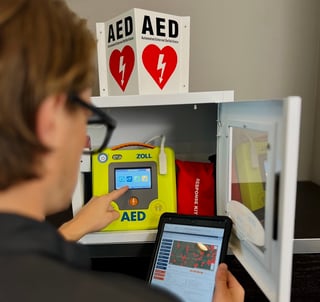
Whether conducted manually or through wireless AED monitoring, inspections must be documented. A "Ready" status indicator is the first check, but verifying the integrity of the cabinet, the presence of the rescue kit, and the physical condition of the unit is essential.
The Premedics "Phases of Service" Approach
At Premedics, we don't just sell devices; we manage life-safety programs. Our unique approach to AED maintenance is divided into clear phases to ensure your organization is never left vulnerable.
- Phase 1: Implementation & Placement: We conduct professional assessments to ensure your AEDs are placed where they can be reached within the "3-minute window."
- Phase 2: Professional Inspection & Upgrades: We professionally inspect your current fleet and offer a Trade-In Program to upgrade legacy units to modern, monitored systems.
- Phase 3: Ongoing Monitoring & Support: We provide 24/7 AED monitoring through our AED Sync™ technology, shipping replacement supplies before they expire—all covered under a single subscription.
Managing the "Readiness Gap" with Wireless Technology
The biggest threat to a heart safety program is human error. Paper checklists get lost, and employee turnover often leads to "orphaned" AEDs that no one is responsible for checking.
Premedics solves this through wireless AED monitoring. By connecting your devices to our cloud-based platform, we receive real-time data on your AED’s health. If a device chirps or a battery runs low, our team knows promptly and acts before an emergency occurs.
Frequently Asked Questions (FAQ)
How often does an AED need to be serviced?
While the device performs self-tests daily, a formal AED service check—including a visual inspection of the hardware and expiration dates—should be conducted monthly and documented for compliance.
What is included in an AED service contract?
A professional contract with Premedics includes all replacement pads and batteries, wireless monitoring, medical oversight, and an annual onsite or virtual inspection to verify the readiness of your entire program.
Can Premedics service different brands of AEDs?
Yes. Premedics is brand-agnostic. We provide AED maintenance for all major manufacturers, including ZOLL, Physio-Control, Defibtech, and Philips.
Close the Readiness Gap Today
If you are tired of tracking expiration dates on a spreadsheet, let the experts handle your AED service and maintenance. Premedics helps you build a fully compliant program so you can focus on your business, knowing you are ready to save a life.
Talk to an AED Specialist Today
Written by Premedics, pioneering the AED management space since 1998.